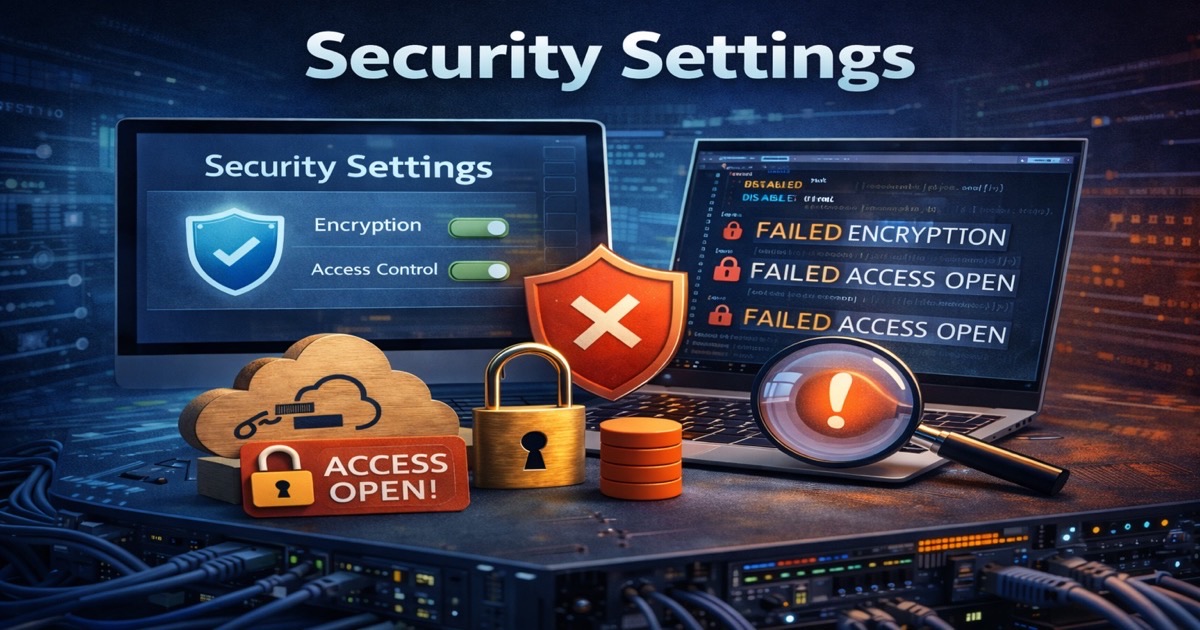
You moved to the cloud because someone promised it would be more secure. And it can be. But here's what they didn't mention: cloud security is your problem too.
Every week I see another breach that started with an S3 bucket set to public. Or an Azure storage account with no access controls. Or AWS credentials committed to a public GitHub repo.
These aren't sophisticated attacks. They're configuration mistakes that take seconds to exploit.
The Shared Responsibility Model (Read This Part)
AWS, Azure, and Google will secure their infrastructure. They'll keep the data centers locked, patch their hypervisors, maintain physical security. That's their job.
Everything else? That's on you.
Your data, your access controls, your network configuration, your identity management - cloud providers give you the tools. Using them correctly is your responsibility.
I've watched companies assume "it's in the cloud, so it's secure" and then act shocked when their customer database ends up on a hacker forum. The cloud provider didn't fail. The configuration did.
The Misconfigurations That Keep Happening
Public storage buckets. This is still the number one issue. S3 buckets, Azure blobs, GCS buckets - all defaulting to private now, but legacy configs and hasty deployments still expose data constantly. Run a scan. You'll probably find something.
Overly permissive IAM policies. "Just give it admin access" is the laziest and most dangerous shortcut in cloud security. Principle of least privilege exists for a reason. That Lambda function doesn't need full S3 access - it needs read access to one bucket.
No encryption at rest. Your cloud provider offers encryption. It's often free. Turn it on. There's no excuse for unencrypted data sitting in storage.
Default credentials and exposed management ports. Spinning up a database and leaving the default password? Opening RDP or SSH to the entire internet? I wish I could say this is rare.
What Actually Works
Use infrastructure as code. Terraform, CloudFormation, Pulumi - pick one. When your infrastructure is code, it's reviewable, version-controlled, and consistent. No more clicking through consoles and hoping you remembered everything.
Enable logging and actually look at it. CloudTrail, Azure Activity Log, GCP Audit Logs. Turn them on. Send them somewhere you'll actually check. When something goes wrong, you need to know what happened.
Run cloud security posture management. Tools like Prowler, ScoutSuite, or the built-in options from your provider will find misconfigurations before attackers do.
Automate security checks in CI/CD. Catch the public bucket before it hits production, not after it makes the news.
The Real Talk
Cloud security isn't harder than on-prem security. It's different. The attack surface has shifted, and so should your thinking.
Stop assuming the cloud provider has it covered. Start treating every configuration as a security decision.
The good news? Most cloud breaches are entirely preventable. The bad news? "Preventable" doesn't mean "prevented."
Check your configs. Today.